7 Essential Tips: Premium Bandsaw Blade for Rebar – Ultimate Rebar Sawing Guide
1. Introduction
Bandsawblade for rebar is the most critical consumable for steel fabrication and construction projects. Rebar, also known as reinforcing steel bar, is an essential construction material used in infrastructure, bridge engineering, and concrete reinforcement projects. In steel fabrication workshops and construction job sites, precise rebar cutting directly affects processing quality, construction safety, and overall production efficiency.
However, cutting reinforced steel bars remains challenging due to high material hardness, tough oxide layers, and frequent continuous cutting cycles. Without a high-performance band saw blade for rebar and correct operating parameters, businesses often face rapid blade wear, burrs, crooked cuts, and frequent blade replacement.
In this in-depth rebar sawing guide, we break down professional knowledge including rebar cutting challenges, durable bandsaw blade for rebar selection, standard machine settings, operational best practices, and common cutting troubleshooting. This article serves as a practical reference for steel fabricators, construction contractors, and industrial procurement managers.
2. Major Challenges When Cutting Rebar
Rebar creates heavy abrasion and mechanical impact during sawing. Three key factors make rebar cutting difficult for ordinary band saw blades:
2.1 High Material Hardness
Common construction-grade HRB500 rebar features a hardness rating between HB 300 and HB 400. The high tensile strength generates strong cutting resistance, which quickly wears down standard saw teeth.
2.2 Hard Oxide Scale Layer
Hot-rolled steel rebar is covered with a dense Fe₃O₄ oxide scale. This rigid outer layer continuously scratches saw teeth, causing premature blade dullness and inconsistent cutting results.
2.3 High-Frequency Continuous Cutting
Industrial processing workshops and construction sites often perform more than 500 cutting cycles daily. Mass repetitive cutting requires excellent fatigue resistance and structural stability from industrial band saw blades.
3. Toliyon Industrial Bimetallic Band Saw Blade for Rebar
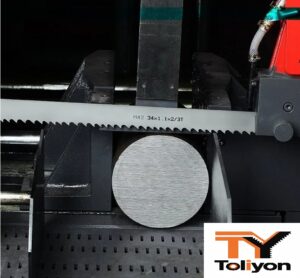
For heavy-duty rebar sawing conditions, the Toliyon dedicated band saw blade for rebar provides optimized cutting performance and extended service life. Adopting industrial bimetallic technology, this saw blade is engineered specifically for hard metal and reinforced steel cutting.
3.1 Product Features
- Custom industrial tooth profile for reduced cutting resistance
- High-frequency vacuum welding for solid tooth adhesion
- Precision heat treatment for enhanced abrasion resistance
3.2 Application Range
Suitable for carbon steel, structural steel, low alloy steel, stainless steel, metal pipes, profiles, and bundled steel. Widely applied in steel fabrication, construction infrastructure, and mechanical processing industries.
4. Technical Advantages of Bimetallic Rebar Saw Blades
4.1 Dual Material Composite Structure
The bimetallic band saw blade combines two different industrial steel materials to balance hardness and flexibility:
- Tooth Tip: M42 high-speed steel with HRC 67-69 hardness for extreme wear resistance.
- Blade Backing: Alloy spring steel with outstanding fatigue resistance and fracture toughness.
Compared with conventional band saw blades, this bimetallic structure extends blade service life by 8 to 10 times.
4.2 Optimized Tooth Geometry
- 10° Rake Angle: Reduces cutting resistance by 30% for smoother material feeding.
- 15° Relief Angle: Prevents flank friction between blade surface and rebar.
- 0.3mm Side Set: Designed to perfectly match rebar sizes from Φ12mm to Φ50mm.
4.3 Wide Machine Compatibility
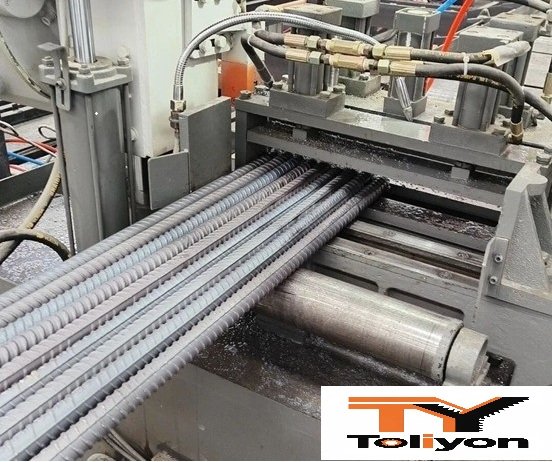
This rebar saw blade fits deformed rebar, round steel, and ribbed steel bars. It works seamlessly with both manual and automatic horizontal band saw machines.
5. Standard Rebar Sawing Operating Guidelines
5.1 Machine Parameter Calibration
- Saw Machine Selection: Use horizontal band saw machines for superior stability during heavy cutting.
- Blade Tension: Keep tension between 280–320 N/mm². Low tension causes crooked cuts; excessive tension leads to blade breakage.
- Guide Wheel Adjustment: Regularly calibrate guide wheels to eliminate blade deflection.
5.2 Operational Best Practices
- New Blade Run-in: Reduce feed rate by 20% for the first 10 cuts to complete gentle run-in.
- Avoid Sudden Stops & Starts: Prevent mechanical impact and tooth chipping.
- Regular Chip Cleaning: Remove metal chips to maintain cutting flatness and precision.
6. Common Rebar Cutting Issues & Solutions
6.1 Rough Cutting Surface & Burrs
Causes: Worn saw teeth, excessive feed speed, insufficient coolant circulation.
Solutions: Replace dull blades, lower feeding speed, and inspect the cooling lubrication system.
6.2 Short Band Saw Blade Lifespan
Causes: Improper linear speed, unpolished hardened oxide layers.
Solutions: Follow factory-recommended cutting speed; polish rebar surfaces before processing.
6.3 Crooked & Deviated Cuts
Causes: Unstable blade tension and misaligned guide rollers.
Solutions: Re-tension the band saw blade and recalibrate the guiding device.
7. Conclusion
Efficient and stable rebar cutting relies on three core elements: high-quality bimetallic bandsaw blade for rebar, reasonable machine parameters, and standardized operating procedures. By choosing professional rebar saw blades and following industrial cutting guidelines, steel fabrication businesses can effectively reduce blade consumption, minimize downtime, and optimize overall production costs.
If you are looking for durable, cost-effective band saw blades for rebar cutting, contact Toliyon for detailed technical specifications and customized wholesale quotations.
#BandSawBlade #RebarCutting #SteelFabrication #ConstructionTools #BimetallicBlade #MetalProcessing #IndustrialBlade #Toliyon