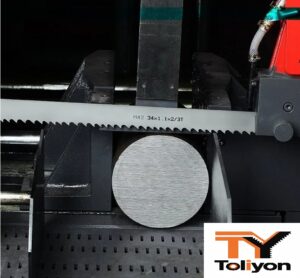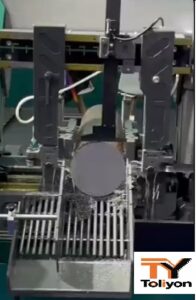
Which bandsaw blade for Fast, Straight, Reliable Cuts should be used for cutting 40CrMo and 42CrMo? If you’re asking this question, you’re probably dealing with tough alloy steels that burn through normal blades too fast.
Short Answer:
If you’re sawing 40CrMo or 42CrMo, a high‑performance M51 bi‑metal bandsaw blade with a variable pitch tooth profile (for example 3/4 or 4/6 TPI), running at around 45–75 m/min with proper break‑in and good coolant, is usually the most reliable and cost‑effective choice.
A Practical (and Friendly) Guide for Alloy Steel Sawing
Cutting 40CrMo and 42CrMo can feel like a “blade graveyard” if the setup is not right.
These steels are fantastic for strength and durability in automotive, construction machinery, and energy applications—but that same strength makes them tough on saw blades.
The good news: with the right blade, tooth design, and basic cutting practices, you can get clean cuts, longer blade life, and more predictable performance. This guide walks you through how to do that in a straightforward, shop‑floor‑friendly way.
In this article, we answer in detail which bandsaw blade should be used for cutting 40CrMo and 42CrMo and how to set the right cutting parameters
1. Why 40CrMo and 42CrMo Are So Tough on Bandsaw Blades
Many shops ask us which bandsaw blade should be used for cutting 40CrMo and 42CrMo without killing the blade too quickly.
Grades like 40CrMo, 42CrMo, 4140, 4340, 35CrMo and similar alloys all live in the “hard‑to‑cut” family. That’s mainly because of three things:
- They are strong and hard
After quenching and tempering, these steels reach high tensile and yield strength. Tooth tips need excellent wear resistance; otherwise, they dull very quickly. - They are tough
They tend to produce continuous, tough chips. If those chips can’t get out of the gullets smoothly, they rub, pack, and damage the blade—especially the gullet area. - They don’t carry heat away very well
Compared with mild steel, more heat stays right at the cutting edge. Without enough cooling, the teeth can overheat, soften, and quickly lose their cutting power.
This is why “standard” blades often struggle: short life, wandering cuts, and rough surface finish are all common symptoms when the setup isn’t matched to the material.
2. The Right Bandsaw Blade Type for 40CrMo / 42CrMo
For these alloy steels, you don’t just need “a blade” — you need the right kind of blade.
Many customers ask us which bandsaw blade should be used for cutting 40CrMo and 42CrMo without destroying the blade too quickly, especially in continuous production.
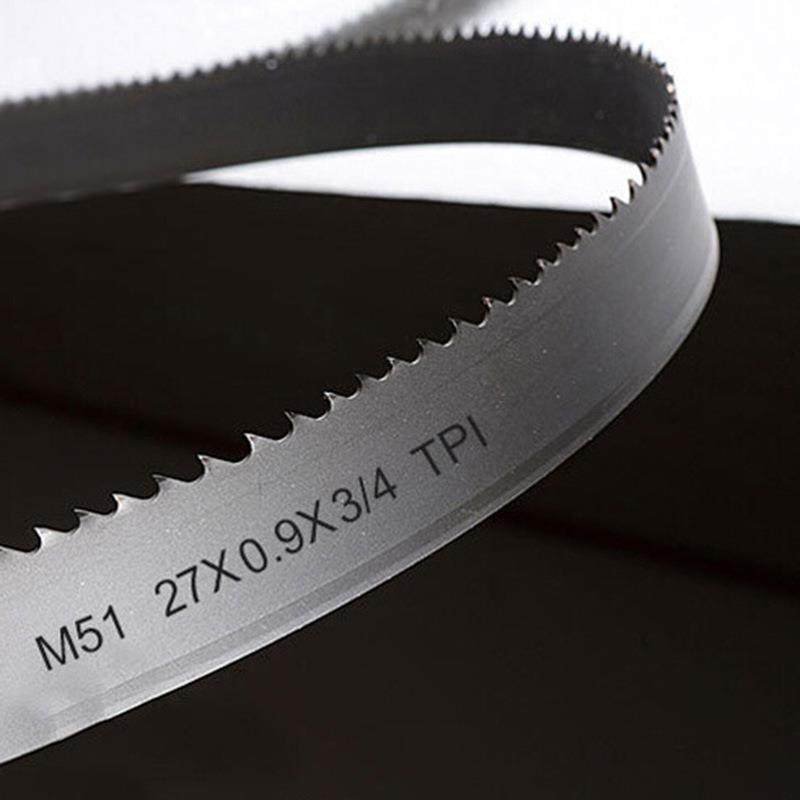
In most cases, an M51 bi‑metal bandsaw blade is the most reliable answer to which bandsaw blade should be used for cutting 40CrMo and 42CrMo in a cost‑effective way.
Toliyon recommend using a high‑performance bi‑metal bandsaw blade with M51 high‑speed steel tooth tips.
Why M51 Is a Better Fit
When you’re sawing 40CrMo, 42CrMo, and similar alloy steels, good results come from the combination of blade choice and process control.
Compared with traditional M42, M51 contains more cobalt and is designed for tougher jobs:
-
Higher red hardness
It holds its hardness even when the cutting zone gets hot. -
Better wear resistance
It stays sharp longer under heavy loads and longer cuts. -
Made for quenched and tempered alloy steels
It’s a great match for materials like 40CrMo, 42CrMo, 4140, 4340 and similar grades.
If your shop cuts these materials regularly, M51 blades often deliver a better cost per cut and more stable performance than general‑purpose options.
If you are still wondering which bandsaw blade should be used for cutting 40CrMo and 42CrMo, using an M51 bandsaw blade with the right setup is a proven starting point for most workshops.
3. Tooth Profile and Pitch: Variable Pitch Makes a Difference
Tooth material is only part of the story. Tooth design is just as important for cutting performance.
Variable Pitch (VP): Our Go‑To Recommendation
For 40CrMo and 42CrMo, we recommend variable pitch (VP) tooth profiles, such as 3/4 TPI or 4/6 TPI. The exact choice depends on your bar size and cross‑section shape.
Why variable pitch helps:
-
Less vibration and noise
Alternating tooth spacing breaks up resonance between the blade and the material. That means smoother, quieter cutting. -
More stable, straighter cuts
Reduced vibration helps prevent blade deflection and “wandering” cuts. -
Better chip evacuation
The gullet geometry and spacing help tough chips leave the cut more easily, protecting the gullets and reducing chip packing.
Precision‑Ground Tooth Tips
Blades with precision‑ground tooth tips start their life sharp and consistent.
That gives you:
- Faster, smoother “bite‑in” on new blades
- Less abnormal wear during the first cuts
- A cleaner surface finish right from the start
4. How You Use the Bandsaw Blade Matters Just as Much
Even the best blade can fail quickly if it’s used the wrong way. Good operation habits are the other 50% of your cutting performance.
4.1 Break‑In: Don’t Skip the First 5–10 Minutes
New blades need a short break‑in period:
- Run at your normal blade speed
- Reduce feed pressure (or feed rate) by about 50% for the first 5–10 minutes
- Let the very sharp tooth edges wear in slightly and take on a stronger cutting shape
This small step can noticeably extend blade life and reduce early tooth chipping and micro‑cracks.
4.2 Basic Cutting Parameters: Speed and Feed
For 40CrMo / 42CrMo and similar alloy steels, this is a good starting point:
- Blade speed: roughly 45–75 m/min
The harder or less stable the setup, the closer you should stay to the lower end of this range. - Feed rate: keep it stable and consistent
- Too much feed → overloaded teeth, chipping, and possible tooth breakage.
- Too little feed → the blade rubs more than it cuts, generating heat and wearing out faster.
Simple checks on the shop floor:
- Listen to the sound
A healthy cut sounds smooth and steady. Squealing, chattering, or heavy “banging” noises mean something needs adjusting. - Look at the chips
- Warm, curled, silvery chips = you’re close to the sweet spot
- Blue or dark chips = too much heat → reduce speed or feed and check coolant
4.3 Cooling and Lubrication: Critical for These Steels
Because 40CrMo and 42CrMo don’t conduct heat away very well, coolant quality and delivery become crucial:
- Use a high‑quality metalworking fluid
- Make sure you have enough flow
- Aim it exactly where the teeth enter the workpiece
Good coolant will:
- Keep both blade and workpiece cooler
- Reduce friction in the gullet
- Help chips flow out instead of welding or packing up
4.4 Machine Condition: The Often-Overlooked Factor
Even a premium blade needs a solid machine setup to perform well.
Key points to check:
-
Guide arm position
Bring the guide arm as close as possible to the workpiece—typically within 10–20 mm. This gives the blade more support and reduces vibration and deflection. -
Blade tension
Set and regularly check tension according to the saw manufacturer’s recommendation.- Too tight can damage bearings
- Too loose can cause drift, vibration, and premature blade wear
5. Putting It All Together
When you’re sawing 40CrMo, 42CrMo, and similar alloy steels, good results come from the combination of blade choice and process control:
- Choose an M51 bi‑metal bandsaw blade
- Use a variable pitch tooth profile suited to your workpiece size
- Break in every new blade for the first 5–10 minutes
- Start with 45–75 m/min blade speed and adjust feed based on sound and chip shape
- Use good coolant and aim it correctly
- Keep your guide arm close and blade tension within spec
Do these consistently, and you’ll usually see:
- Longer blade life
- More stable cutting
- Better cut quality
- Lower cost per part
6. Want a Setup Recommendation for Your Shop?
Every workshop is a bit different—material grades and hardness, section sizes, saw models, production volumes and quality targets all affect the ideal setup.
If you regularly cut 40CrMo, 42CrMo, 4140, 4340 or other alloy steels and want a second opinion on your blade and parameters, our technical team can help with a complimentary cutting recommendation, including:
- Blade type and tooth material
- Tooth profile and pitch selection
- Starting ranges for blade speed and feed
- Coolant and basic machine setup tips
In short, if you are still wondering which bandsaw blade should be used for cutting 40CrMo and 42CrMo, an M51 bi‑metal bandsaw blade with a variable pitch tooth profile is a proven solution for most workshops.
When you’re sawing 40CrMo, 42CrMo, and similar alloy steels, good results come from the combination of blade choice and process control.